
Have you found yourself struggling to carry out daily tasks such as locating objects in your home or finding a specific product on the supermarket shelf? If you have suffered from a stroke, a traumatic brain injury, or another form of neurological brain damage, you may also have a visual disorder.
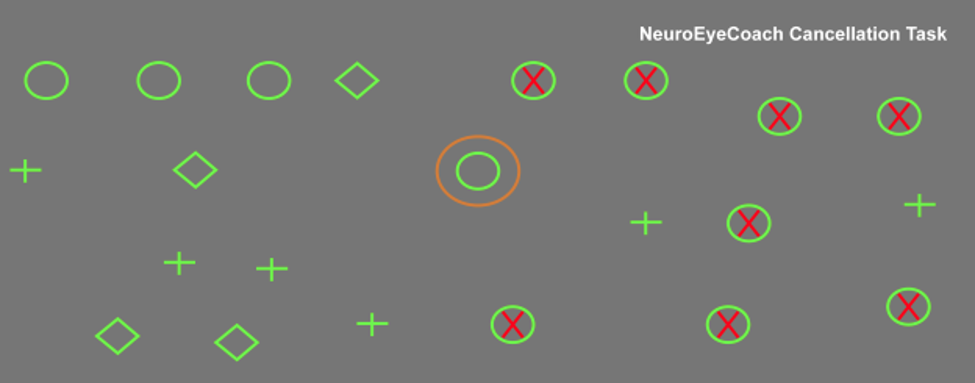
You may know that brain injuries can cause visual field loss, but they can also affect normal eye movements. Because we rely on vision to guide many everyday activities, these changes can make daily tasks more difficult. Targeted training can help you use your eye movements more effectively. NeuroEyeCoach is specifically designed to help people make the most of their remaining vision through improved eye-movement skills.
Who Can Benefit?
NeuroEyeCoach was specifically developed for people with visual field loss related to neurological injury, such as stroke or other brain injury. Some people develop effective strategies for compensating for their vision loss, while others may continue to have difficulty with visual search and everyday activities. NeuroEyeCoach provides structured eye-movement training designed to help improve visual-search efficiency and make better use of remaining vision.
Could I Be Suffering?
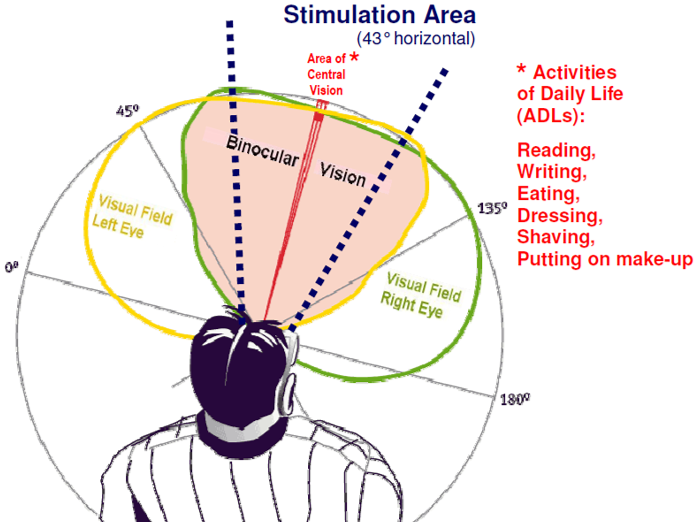
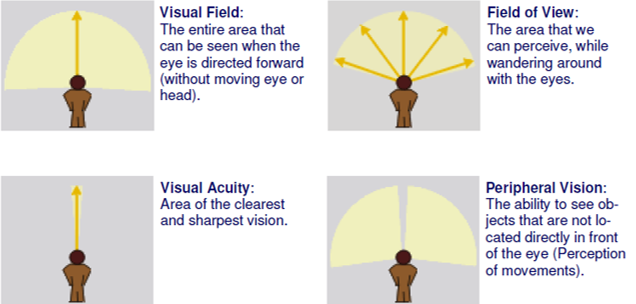
A full visual field helps us take in and respond to what is happening around us, while eye movements bring objects of interest into sharp central vision. During many visual activities, people make around 3–4 rapid eye movements per second. These movements, called saccades, shift the eyes between points of interest. The size of each movement is its saccade amplitude.
After neurological injury that causes visual field loss, eye-movement patterns may change. Some people make more frequent fixations and, in certain tasks, shorter saccades. They may also scan the sighted and affected sides differently, making it harder to find objects, notice events in the area of field loss, and take in a scene efficiently. The specific difficulties vary from person to person and depend on the task; visual neglect can also contribute.
What are the Patient Requirements for NeuroEyeCoach?
To complete the NeuroEyeCoach program, you must be able to sit upright and concentrate in a quiet setting for sessions of about 15–20 minutes. You may train two to six times a day, for up to two hours total per day, and should train at least three times a week. You must also be able to use the left and right mouse buttons or arrow keys on your computer.
Since NeuroEyeCoach is a computer-based therapy that can be completed in the comfort of your own home, the technical requirements are as follows:
An internet connection and a desktop or laptop PC running Windows 10 (version 1903 or later) are required. The NovaVision therapies are not compatible with Apple’s operating system, but can be used on an Apple computer if Windows or a program such as Parallels is installed. The screen must be at least 15 inches diagonally. NovaVision therapies require a minimum screen resolution of 1920 × 1080 pixels.
You should have some experience using a computer and browsing the internet. To use the therapies, you’ll need to download and run an installation program from the NovaVision website portal. Progress reports can also be downloaded from the portal. Before registration, the portal automatically checks your computer’s technical specifications and lets you know if they don’t meet the requirements.
If NeuroEyeCoach seems like the solution you have been looking for, you can find out more about the therapy and its requirements here.
NeuroEyeCoach is supported by several decades of clinical research and, in the largest study of NeuroEyeCoach is based on decades of research into compensatory eye-movement training for people with visual field loss after brain injury. In a 2020 study of 296 people with hemianopia, 87% improved their visual-search time and 80% made fewer errors after completing the program; 66% also reported reduced visual disability. The study found that several factors—including sex, side of field loss, age at injury, and time between injury and treatment—did not predict improvement across the outcomes assessed. A 2025 study found improvements among participants who used NeuroEyeCoach at home and in a clinic, with no significant difference between the groups in reported effects on daily activities. Could NeuroEyeCoach be an option for you or someone you or a loved one?
If the symptoms above sound familiar and you would like ability to make the most of your remaining vision, download our free demo to get started.