Have you found yourself struggling to carry out daily tasks such as locating objects in your home or finding a specific product on the supermarket shelf? If you have suffered from a stroke, a traumatic brain injury, or another form of neurological brain damage, you...
Why Some Stroke Patients Suffer Vision Loss – and Some Don’t
Patients who have recently experienced a stroke or brain injury will often tell their physicians that they are having difficulty seeing out of one eye. Although certain conditions can mimic this sensation, visual problems that occur after a stroke or brain injury are...
The Eyes – Our Window To The World
We get the most knowledge of our surroundings through our eyes, which convey more information than any of our other senses. Every second the eyes absorb 10 million pieces of information and pass it on to the brain. Our vision adapts to different light conditions at...
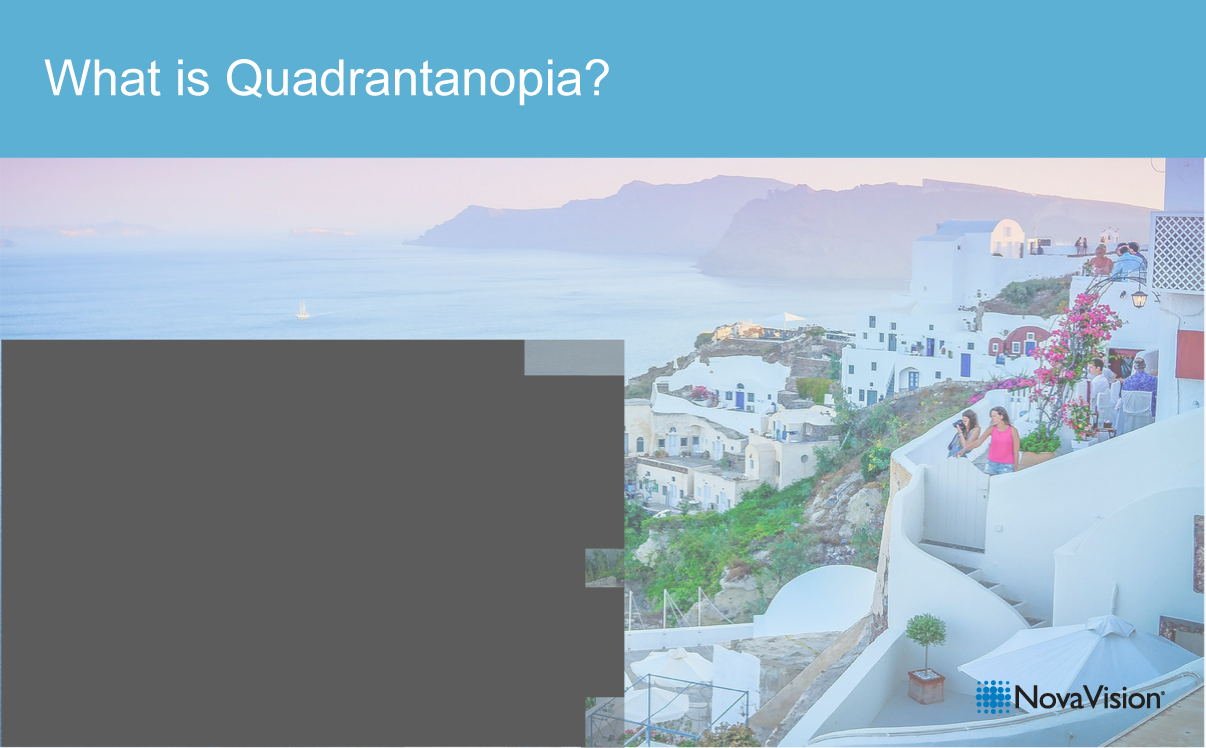
What is Quadrantanopia?
We often hear the term “Hemianopia” following neurological visual field loss due to stroke or traumatic brain injury. Hemianopia is the loss of the right or left half of the visual field in both eyes. However, some patients with neurological visual field loss find...
Why Giving Your Brain Time To Recover From Concussion Is More Important Than You Think
Medical professionals have speculated that cutting back on mental activity may reduce a patient’s recovery time after a concussion.So, what does this mean in layman's terms? Giving your brain time to rest following a concussion will cut down on the time it takes to...
Life After Traumatic Brain Injury: What You Can Do In The First Weeks To Help Your Recovery
The road to recovery after a traumatic brain injury is often long and sometimes difficult. The process may be physically and emotionally draining for both victim and family alike. Gaining a good understanding of the recovery process early on will set you and your...
Emotional Recovery After Stroke
Stroke survivors often experience emotional and behavioral challenges beyond the physical side effects. Since strokes have a direct impact on the brain, it is not uncommon for stroke survivors to feel anxiety, anger or depression. The injuries sustained from a...
The Hidden Visual Problems that Follow Traumatic Brain Injury
Not unlike stroke, it’s common for visual problems resulting from Traumatic Brain Injuries to go unnoticed during the initial treatment of the injury. All too often, the visual side effects that accompany a brain injury are neglected because they may be hidden. This...
How Neurological Vision Impairment is Different Than Other Common Eye Conditions
We’ve mentioned in previous blog posts that vision loss after a stroke or other brain injury can often go unnoticed. Some of this can be attributed to patients and doctors alike focusing on more threatening health issues after these traumatic events. It can also...
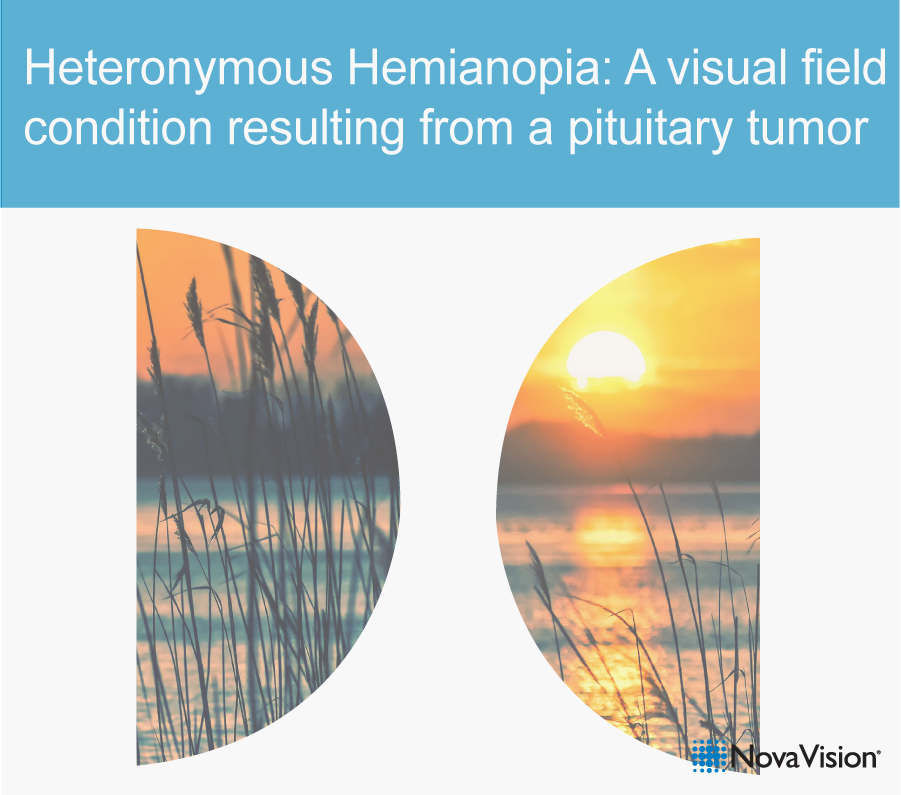
Heteronymous Hemianopia: A Visual Field Condition Resulting From A Pituitary Tumor
The pituitary gland is situated in the center of the brain, about 10 cm behind the nose, along a virtual line between the ears. Despite its small size - about the size of a cherry-pit - it is very important. The pituitary gland is the superior ductless gland of the...